
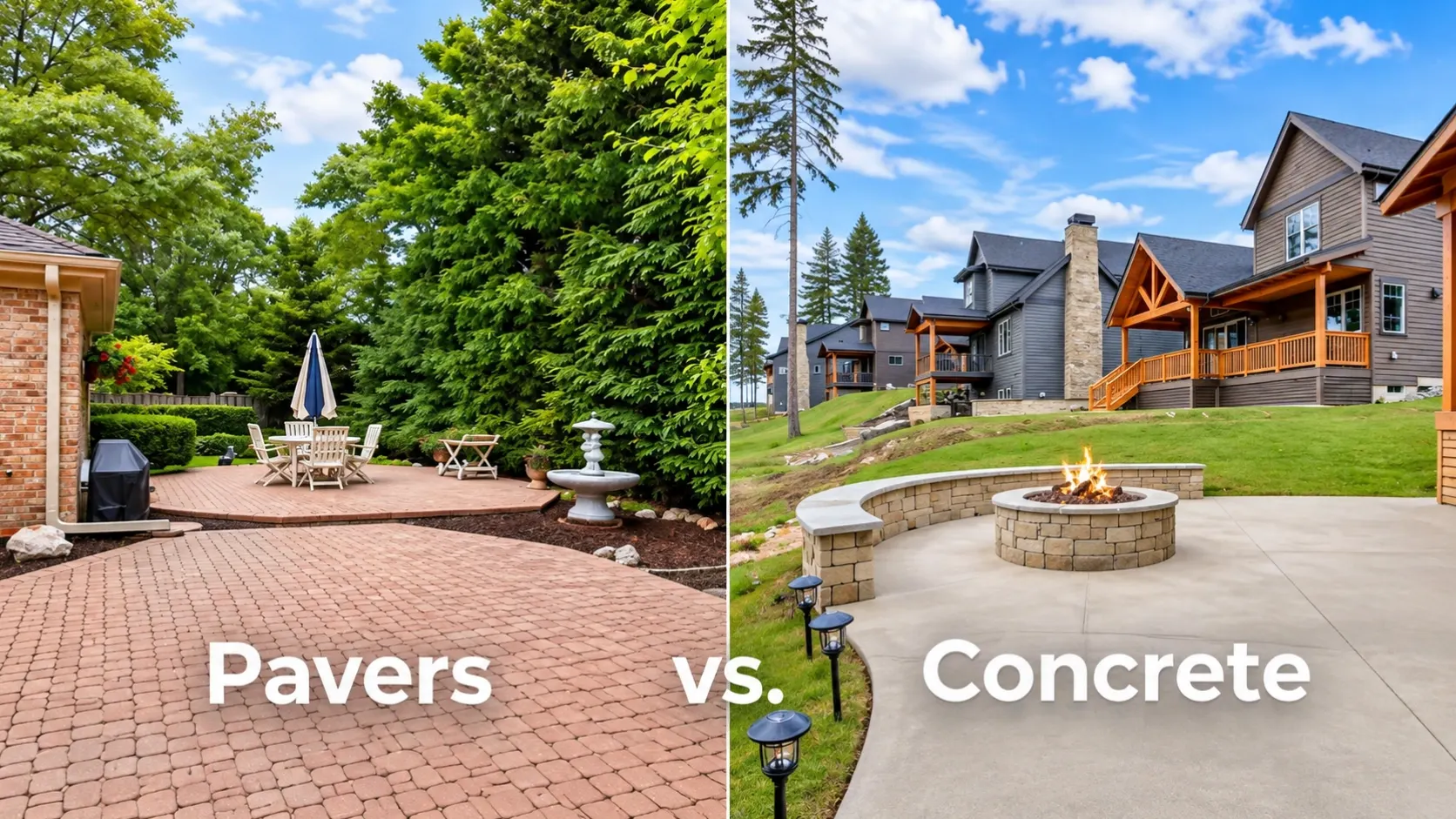
Planning a new driveway, pathway or outdoor entertaining area? One of the first decisions you’ll need to make is whether to use concrete or brick pavers.
Both are popular choices for Australian homes. Brick pavers offer a traditional look and flexibility for repairs, while concrete provides a continuous surface with a wide range of finishes and design options.
So, which one is right for your property?
At SimCrete Solutions, we work with homeowners across Melbourne to create practical, well-finished outdoor spaces. Here’s how concrete and brick pavers compare in terms of durability, maintenance, appearance, cost and long-term value.
1. Durability and Strength
Your driveway or outdoor surface needs to handle everyday use, changing weather and, in some cases, regular vehicle traffic. Both concrete and brick pavers can perform well when installed properly, but they work in different ways.
Concrete
Concrete creates a solid, continuous surface that is well suited to driveways, footpaths, patios and outdoor entertaining areas.
Its performance depends on more than just the concrete itself. Proper ground preparation, a suitable base, reinforcement where required, correct thickness and well-placed control joints all play a part in how the finished surface performs over time.
Brick Pavers
Brick pavers are durable individual units laid over a prepared base. However, the stability of the finished surface depends heavily on the quality of the base and installation.
Over time, pavers can shift, sink or become uneven due to ground movement, drainage issues or heavy use. This is particularly worth considering for driveways that regularly carry vehicles.
Which is better?
Both options can provide a durable outdoor surface. Concrete offers a continuous finish without individual units or joints that can move, while pavers provide flexibility if a small section needs attention.
2. Maintenance Requirements
Think about how much time you’re willing to spend maintaining your outdoor surfaces. The amount of ongoing care can differ between concrete and brick pavers.
Concrete
Concrete is generally straightforward to maintain. Regular sweeping and occasional washing can help keep the surface looking clean. Depending on the finish and product used, resealing may also be recommended from time to time.
Brick Pavers
Pavers need a little more attention in the joints between individual units. Weeds can grow through gaps, jointing sand may need topping up, and some pavers may need to be levelled again if they move or settle.
Which is better?
If you prefer a continuous surface with fewer joints to maintain, concrete may be the more convenient option. Brick pavers can still be a practical choice, but their joints may require occasional maintenance.
3. Appearance and Design Options
Concrete doesn’t have to mean a plain grey driveway. There are several finishes available today, making it possible to create an outdoor surface that suits the style of your home.
Concrete
Some popular concrete finishes include:
- Exposed aggregate: Reveals decorative stones within the concrete, creating a textured finish with natural variation.
- Coloured concrete: Adds colour to the surface to complement your home’s exterior.
- Decorative concrete: Offers different textures and design possibilities for a more customised look.
- Smooth and architectural finishes: Create a clean, understated appearance that works particularly well with contemporary homes.
One of concrete’s advantages is the ability to create a consistent look across driveways, pathways and entertaining areas.
Brick Pavers
Brick pavers have a familiar, timeless appearance. They come in different colours, shapes, sizes and laying patterns, making them suitable for traditional homes, garden paths and outdoor areas.
They can also be arranged in patterns to add character and visual interest to a space.
Which is better?
It comes down to the style you’re after. Pavers are a good fit for a classic, patterned look, while decorative concrete offers plenty of options for a more continuous and contemporary finish.
4. Cost and Long-Term Value
The initial cost is often an important part of the decision. However, it’s worth looking beyond the installation price and considering maintenance, repairs and how you want the finished space to look over time.
Concrete
The cost of a concrete project depends on the area size, chosen finish, excavation, ground preparation and site access.
Plain concrete is generally a more affordable finish than decorative options such as exposed aggregate. More detailed designs or difficult site conditions can also increase the overall project cost.
When installed correctly and maintained as recommended, a concrete surface can provide many years of use.
Brick Pavers
Brick pavers can be a cost-effective option, particularly for smaller areas or straightforward layouts. However, the final price depends on the type of paver, laying pattern, base preparation and labour involved.
It’s also worth considering the potential cost of replacing jointing sand, controlling weeds or re-levelling sections over time.
Which offers better value?
If your priority is keeping the initial cost down, brick pavers may be worth considering. If you want a continuous surface with a choice of decorative finishes and relatively straightforward routine maintenance, concrete may offer better long-term value for your project.
The right choice will depend on your budget, property and expectations.
5. Repairs and Longevity
No outdoor surface is completely free from wear or damage. Understanding how each material can be repaired will help you make a more informed decision.
Concrete
A properly installed concrete surface can last for many years. However, cracking can occur due to shrinkage, ground movement, drainage problems or other site conditions.
Repairing concrete can be more complicated than replacing an individual paver. Depending on the location and finish, a repaired section may also look different from the surrounding surface.
Brick Pavers
One of the main advantages of brick pavers is that individual units can usually be lifted, replaced or re-levelled without removing the entire paved area.
This makes localised repairs more straightforward, provided matching replacement pavers are available, and the underlying issue is addressed.
Which is better?
Pavers have an advantage when it comes to replacing individual damaged sections. Concrete provides a continuous surface, but repairs can be more noticeable depending on the type and condition of the finish.
So, Should You Choose Concrete or Brick Pavers?
There isn’t one answer that suits every property. Both materials have their place, and the best choice depends on your budget, preferred appearance, intended use and the condition of the site.
Here’s a quick comparison
| What matters most? | Concrete | Brick pavers |
| Surface appearance | Continuous, with various decorative finishes | Traditional, with different patterns and colours |
| Maintenance | Generally straightforward | Joints may need occasional attention |
| Driveway use | Suitable when designed and installed correctly | Suitable when the base and installation are appropriate |
| Individual repairs | Repairs can be more noticeable | Individual units can often be replaced |
| Design flexibility | Different colours, textures and finishes | Different shapes, colours and laying patterns |
| Initial cost | Depends on finish and site preparation | Depends on paver type and installation |
If you’re looking for a modern outdoor surface with a consistent finish and a choice of styles, concrete is well worth considering.
From exposed aggregate driveways to decorative concrete pathways and outdoor entertaining areas, SimCrete Solutions can help you explore options that suit your home and how you use your outdoor space.
Looking for Concrete Services in Melbourne?
Thinking about upgrading your driveway, pathways or outdoor entertaining area? SimCrete Solutions works across Melbourne’s South Eastern Suburbs and the Mornington Peninsula.
Get in touch to discuss your project, compare concrete finishes and find out what may work best for your property.
Call SimCrete Solutions on 0433 663 351 to discuss your concreting project.
Frequently Asked Questions: Concrete vs Brick Pavers
1. Is concrete better than brick pavers for a driveway?
Both can work well for driveways when installed correctly. Concrete provides a continuous surface with different finish options, while brick pavers offer a traditional appearance and allow individual units to be replaced. Your choice will depend on your budget, preferred style and how you use your driveway.
2. Are concrete driveways cheaper than brick pavers?
The cost depends on the size of the area, materials, finish and installation requirements. Plain concrete can be a cost-effective option, while decorative concrete finishes may cost more. Brick pavers can also vary considerably in price depending on the type of paver and laying pattern. Comparing quotes for the same project specifications is the best way to assess the costs.
3. Which requires less maintenance: concrete or brick pavers?
Concrete generally requires less routine attention because it has fewer joints where weeds can grow, or sand can wash away. Brick pavers may need occasional weed removal, jointing sand replacement and re-levelling if individual units move or settle.
4. Do brick pavers move or sink over time?
They can. Pavers may become uneven due to ground movement, poor base preparation, drainage problems or regular vehicle traffic. Proper installation and a well-prepared base help reduce the likelihood of movement.
5. Does a concrete driveway crack?
Concrete can crack over time due to shrinkage, ground movement, changes in temperature or other site conditions. Proper preparation, suitable reinforcement where required and correctly placed control joints can help manage the risk, but cracking cannot be ruled out completely.
6. Can damaged concrete or brick pavers be repaired?
Yes, but the repair process is different. Individual damaged pavers can often be lifted and replaced without disturbing the whole area. Concrete repairs may be more noticeable, particularly when the surface has a decorative finish or the surrounding concrete has weathered.
7. What looks better: exposed aggregate concrete or brick pavers?
It depends on the style of your property. Exposed aggregate offers a textured finish with visible decorative stones and works well with many contemporary and traditional homes. Brick pavers provide a classic look with different colours, shapes and laying patterns.
8. Which is better for outdoor entertaining areas?
Both can be suitable. Concrete offers a continuous surface with options such as coloured concrete and exposed aggregate. Brick pavers provide a more traditional, patterned appearance. Consider the overall design, drainage, maintenance and how the area will be used before choosing.
9. How long does a concrete driveway last compared with brick pavers?
Both can last for many years when installed correctly and maintained appropriately. Concrete performance depends on factors such as ground preparation, drainage and usage. Brick pavers also rely on a stable base and may need occasional re-levelling or joint maintenance over time.
10. Which option should I choose for my Melbourne property?
Consider your budget, the style of your home, site conditions and the amount of maintenance you’re comfortable with. Concrete may suit homeowners looking for a continuous surface with a range of finishes, while brick pavers may appeal to those who prefer a traditional look and easier individual-unit repairs. SimCrete Solutions can help you explore concrete options for your driveway, pathways or outdoor entertaining area.
Explore Our Other Concrete Services
- Concrete Driveways: Practical and attractive driveway solutions for Melbourne properties.
- Concrete Pathways & Footpaths: Connect your entrance, garden and outdoor spaces.
- Concrete Pool Surrounds: Explore decorative finishes for your swimming pool area.
- Concrete Entertaining Areas: Create an outdoor space for dining, BBQs and relaxing.
- Coloured Concrete: Coordinate your concrete surfaces with your home and landscaping.